Luxury Hotel Rooms with Hot Tubs: Are They Worth It?
Choosing a hotel is no longer just about location, breakfast, or a soft mattress; for many travelers, the room itself has become a central part of the trip. Suites with private hot tubs promise a quieter, more personal kind of comfort after airports, meetings, sightseeing, or long drives, yet the price jump can be substantial. This article explains where the upgrade delivers genuine value, how amenities differ across properties, and what details deserve close attention before you book.
Outline: • What separates a luxury room with a hot tub from a standard upgrade • How privacy and relaxation influence the guest experience • Which suite categories offer the strongest value for different travelers • What to verify before booking • Who should consider the splurge, and when it makes sense to save
What Makes a Hot-Tub Suite Feel Truly Luxurious
A luxury hotel room with a hot tub is not simply a larger bedroom with bubbles added to the bathroom. At the high end of the market, the appeal comes from the way several details work together: layout, privacy, materials, sound control, lighting, service, and the sense that the room can support more than one mood. In the morning it might feel like a bright, efficient base camp before exploring a city. At night it can shift into a cocoon, with warm water, dim lights, and the faint hush of a higher floor or secluded terrace.
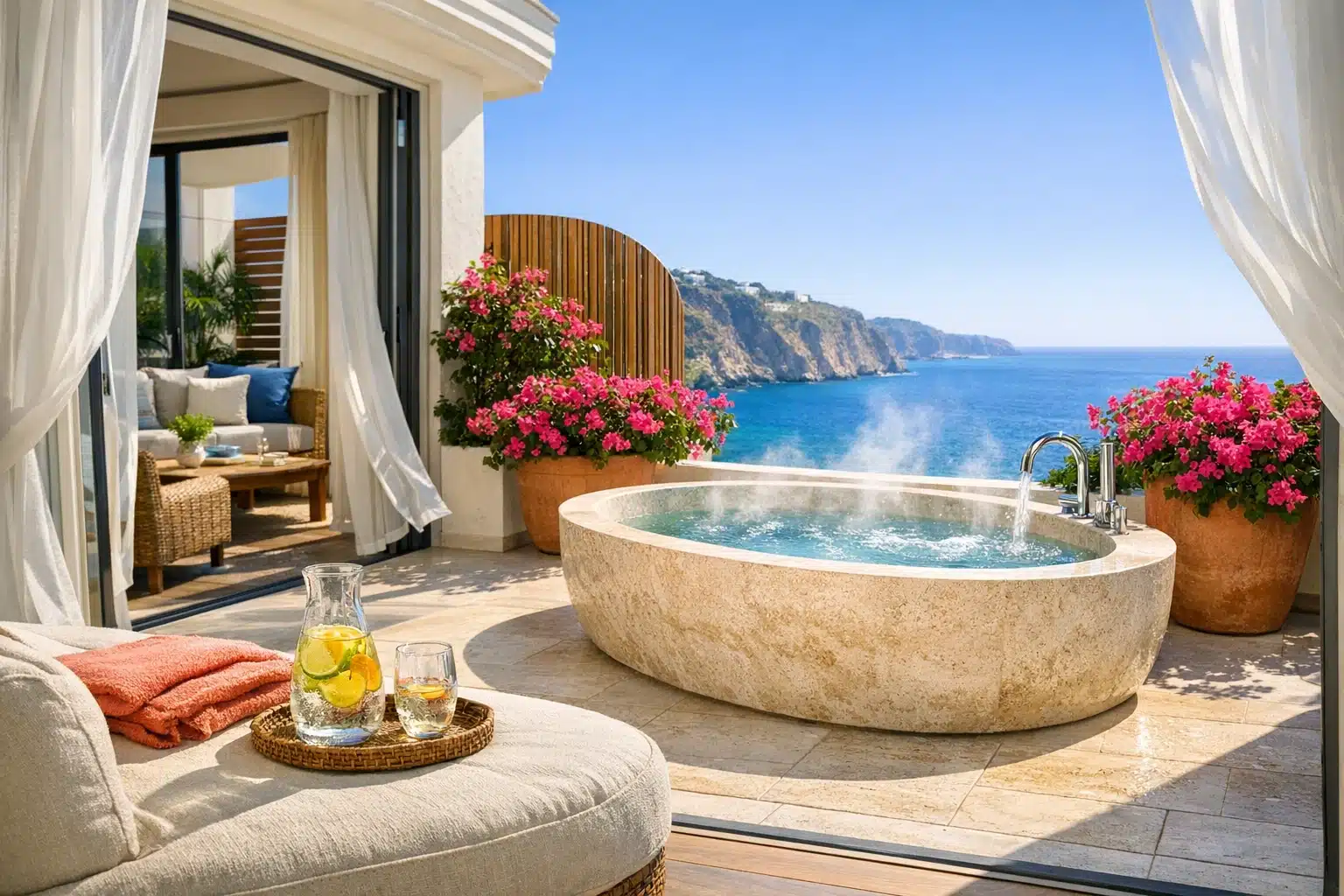
Not every property defines the amenity in the same way. Some hotels use the phrase “hot tub” for an indoor jetted bath designed for one or two people. Others reserve it for an outdoor spa-style tub on a balcony, rooftop deck, or garden patio. In marketing language, the word “jacuzzi” is often used loosely, even when the tub is simply a whirlpool bath rather than a branded unit. That difference matters because guest expectations change depending on size, temperature control, and placement within the suite.
Common features that separate a true luxury setup from a basic upgrade include:
• a larger room footprint, often with a sitting area or separate lounge
• better visual privacy, such as screens, frosted partitions, or terrace landscaping
• upgraded finishes like natural stone, deep soaking space, premium fixtures, and plush robes
• hospitality details, including room service presentation, late checkout options, or turndown service
• atmosphere controls, such as blackout curtains, multiple lighting zones, and quieter ventilation
Size also affects the experience more than many travelers expect. A standard city hotel room may fall in the 250 to 350 square foot range, while junior suites can stretch to 400 to 550 square feet, and specialty suites often go well beyond that. When a tub is added to a cramped room, it can feel like a novelty squeezed into the floor plan. In a thoughtfully designed suite, however, the bath becomes part of a wider sensory environment rather than a decorative extra.
This is why some travelers rave about the indulgence while others shrug and say it was overpriced. The tub alone is not the luxury. The luxury is the combination of space, seclusion, and service that allows the room to function as a retreat instead of just a place to sleep.
Privacy, Relaxation, and the Real Experience Behind the Upgrade
Explore the benefits of luxury hotel rooms with hot tubs, from privacy and relaxation to booking tips and suite comparisons. That sentence captures the core reason these rooms continue to attract attention across city hotels, resorts, and boutique properties. Travelers are not only paying for a fixture; they are paying for control over their environment. In hospitality research and guest reviews alike, perceived privacy often ranks as one of the strongest drivers of satisfaction, especially for couples, solo travelers seeking quiet, and professionals who want recovery time after demanding schedules.
Warm water can create a convincing psychological break between the outside world and the room. After a day of walking through museums, navigating terminals, attending events, or sitting through meetings, stepping into a private tub can feel like turning down the volume on the entire day. The benefit is not just physical comfort, though muscle ease is certainly part of it. The larger value comes from rhythm. You do not need to dress, leave the room, share a spa area, or adjust your schedule around public facilities. Convenience turns relaxation into something you actually use rather than something you admire in the brochure and skip in real life.
The privacy factor matters in several practical ways:
• couples can enjoy a more intimate and unhurried setting without heading to a crowded common-area spa
• solo guests can decompress without the social friction of shared wellness spaces
• travelers on short breaks can maximize limited time because the amenity is available right inside the suite
• guests who value discretion, whether for celebration or simple peace, have more personal control over the experience
That said, the promise of privacy is only fulfilled when the room is designed properly. A terrace tub with neighboring balconies in clear view may look striking in photos but feel surprisingly exposed. An indoor jetted bath beside the bed can be romantic for some and awkward for others, especially if humidity, noise, or lighting are poorly managed. The best properties solve these issues with screening, ventilation, sound insulation, and intentional zoning between sleep and bathing spaces.
There is also an emotional dimension that is easy to underestimate. A memorable stay is often built from small rituals: unpacking slowly, ordering dessert to the room, soaking while city lights flicker outside, or watching weather roll across a distant coastline. Luxury does not always mean excess. Sometimes it simply means enough calm to hear yourself think.
Suite Comparisons: Standard Upgrade or Signature Splurge?
Whether a hot-tub room is worth the price depends heavily on what kind of suite you are comparing. Hotels package this amenity across several tiers, and the gap between them can be dramatic. A standard room with a jetted bath inside the bathroom may carry a moderate premium, while a signature suite with a private outdoor spa terrace can cost several times more than the base category. Without understanding the room ladder, it is easy to overpay for a label or underbook the kind of experience you actually want.
A useful way to compare options is to separate them into functional categories:
• enhanced standard rooms, where the tub is the main upgrade and the room size changes only slightly
• junior suites, which usually add a lounge area and more breathing room
• specialty suites, where design, views, or terraces become part of the value
• villas, penthouses, or resort residences, where the hot tub is one feature among many premium amenities
Price premiums vary by market, season, and brand positioning, but a room with an in-room spa bath often costs roughly 20 to 60 percent more than a standard category in the same property. In peak holiday periods or resort destinations, the gap can be much higher. The important question is not whether the premium exists; it almost always does. The question is what else comes with it. If the upgrade buys extra square footage, a stronger view, better privacy, club access, or flexible checkout, the overall value may be more reasonable than it first appears.
Location also shapes the calculation. In a dense city hotel, where you may spend most of the day outside, paying a steep premium for a large suite can make less sense unless the room is central to the occasion. On a mountain retreat, lakeside lodge, or coastal resort, however, the room often becomes part of the destination itself. A private soak during snowfall or at sunset can justify the rate in a way that a quick overnight business stay usually does not.
Travel style matters too. Some guests want spectacle: a terrace tub, dramatic skyline, and a suite designed for celebration. Others want quiet usefulness: enough space to unwind, a well-maintained bath, and no need to share facilities. The smartest comparison is not luxury versus non-luxury in general. It is experience versus itinerary. If the room will play a central role in how you spend your time, the splurge is easier to defend.
Booking Tips That Protect Value Before You Reserve
The most expensive mistake with a luxury suite is assuming the photos tell the whole story. Hotel imagery is designed to sell atmosphere, not necessarily to answer practical questions. A tub may be photographed at an angle that hides proximity to neighboring rooms, a terrace may look larger than it is, and the difference between a deep soaking bath and a true temperature-controlled outdoor spa is not always obvious. Before booking, it helps to think like a careful editor rather than an impulsive dreamer.
Start with the room description on the hotel’s own site, then compare it with reputable travel agencies and recent guest reviews. Look for concrete language. Does the listing specify indoor or outdoor placement? Does it mention heating, size, terrace screening, or operating hours? Some properties refill and service outdoor tubs between stays, while others use built-in systems that remain in place. Neither approach is automatically better, but clarity matters because maintenance standards directly affect comfort.
A practical pre-booking checklist can save disappointment:
• confirm whether the tub is private to your room and not part of a shared patio area
• ask if the water is heated on demand or maintained continuously
• verify whether the room has blackout curtains, strong ventilation, and sound insulation
• check if balcony or terrace tubs are seasonal in colder climates
• read cancellation terms carefully, especially for premium suite categories
• review recent guest comments about cleanliness, water temperature, and privacy
Timing can influence value almost as much as room type. Midweek rates in business-oriented hotels may be higher, while leisure destinations can soften outside holidays and major events. Shoulder season sometimes offers the sweet spot: lower rates, fewer crowds, and weather that still supports outdoor use. On the other hand, a dramatic winter setting or shoulder-season stormy coastline can make an indoor spa bath even more appealing, because the room becomes a shelter with atmosphere rather than a place you are rushing to leave.
It is also worth asking yourself one blunt question: will you actually use it? Travelers with packed conference schedules, early departures, or constant dining plans may barely touch the amenity. If your itinerary leaves only a few tired minutes in the room, a hotel with a strong public spa, excellent bed, and lower nightly rate might be the better choice. Booking well is not about chasing the fanciest description. It is about matching the room to the life you will actually live during the stay.
Conclusion: Who Should Book a Luxury Hot-Tub Suite?
For the right traveler, a luxury hotel room with a hot tub can be more than a glamorous upgrade. It can reshape the tempo of the trip. If you are planning an anniversary, mini-moon, winter escape, staycation, or recovery-focused weekend, the suite may become the setting that gives the trip its identity. In those cases, the room is not merely supporting the itinerary; it is part of the reason for traveling at all. That shift makes the premium easier to understand.
This option tends to work best for guests who value time in the room as much as time outside it. Couples often appreciate the privacy and ceremony of the experience. Solo travelers who want quiet after demanding work schedules may find it equally worthwhile. Long-haul travelers sometimes use these rooms as decompression spaces after flights, while creative professionals and remote workers may enjoy the way a thoughtfully designed suite supports both productivity and rest. The audience is broader than the usual romance-focused marketing suggests.
It may be less compelling for travelers whose schedule is packed from dawn to midnight, or for guests who simply prefer to spend their budget on dining, location, or a longer stay. A great hotel without a private tub can still deliver excellent sleep, polished service, and a memorable sense of place. Luxury is not always about more features. Sometimes it is about choosing the features that align with how you actually travel.
As a final guide, consider the following:
• book the upgrade when the room is central to the occasion
• skip it when you know your itinerary leaves no time to enjoy it
• prioritize layout, privacy, and maintenance over flashy photography
• compare total suite value, not just the presence of jets or a larger bathroom
• remember that the best luxury stays feel effortless, not merely expensive
So, are these suites worth it? Often yes, but only when the promise matches the property and the property matches the traveler. If you want your stay to feel immersive, restful, and a little cinematic, a well-chosen hot-tub suite can deliver genuine satisfaction. If you want pure efficiency, it may be smarter to save the money. The sweet spot lies in choosing with intention, not impulse.